ROYAL FACADE
Blog
Which insulation material is better: expanded (EPS) or extruded polystyrene (XPS) – which one should you choose?
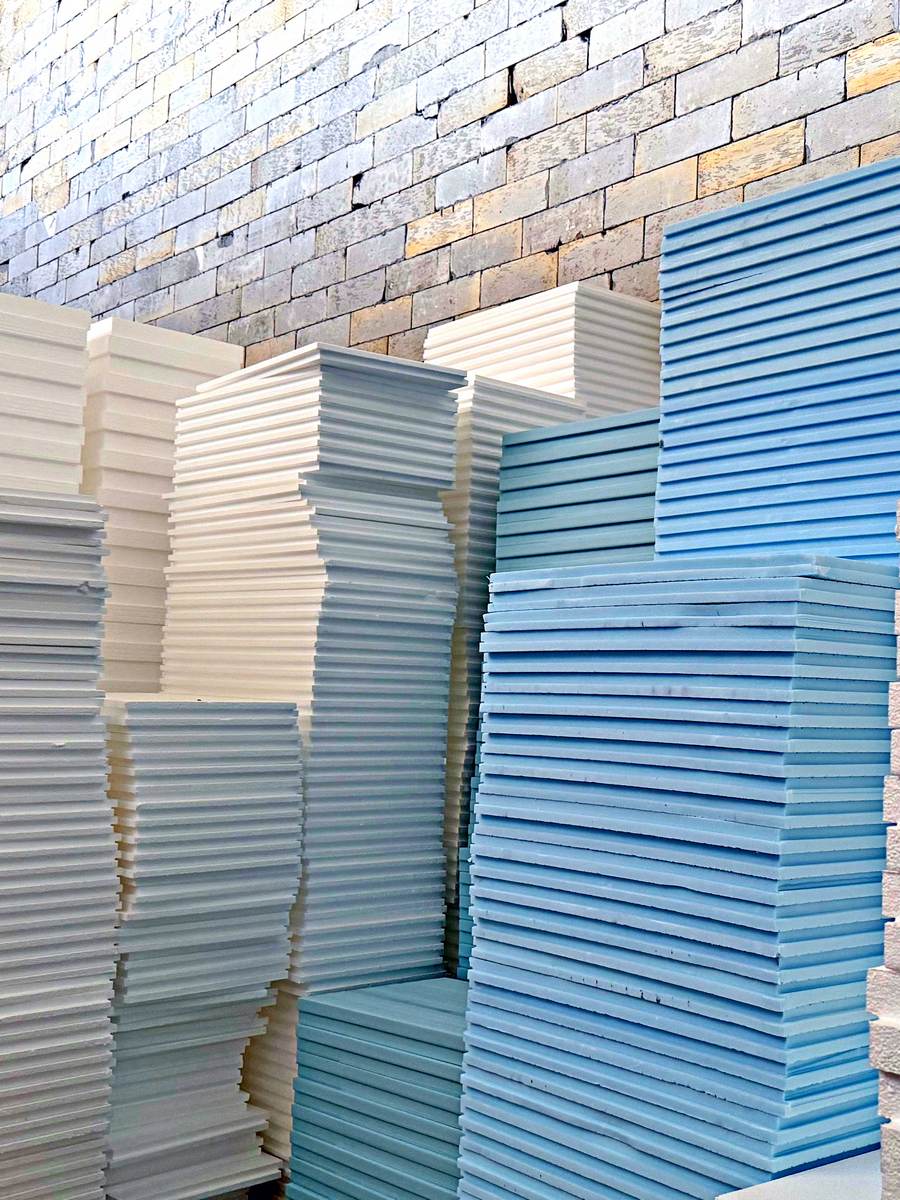
When choosing between expanded polystyrene (EPS-90) and extruded polystyrene (XPS-35), it’s important to understand their key properties to make the best decision for your needs. Both materials have specific advantages and disadvantages, and their suitability depends on the intended use.
Among the most popular insulation materials on the market today, two main types stand out: EPS (Expanded Polystyrene) and XPS (Extruded Polystyrene). As a result, many people wonder: which of these is the better insulator?
To make the right decision, we need to compare their properties and performance characteristics. Let’s take a closer look.
Service Life and Thermal Conductivity of
EPS-90 and XPS-35
Here’s a comparison of EPS-90 and XPS-35 based on critical factors such as thermal conductivity and service life:
| Comparison Criteria | EPS-90 | XPS-35 |
|---|---|---|
| Service Life | 40–50 years, but only if installed correctly using high-quality raw materials (styrene) and proper production techniques. The lifespan can be reduced due to the material’s relatively high water absorption and susceptibility to mechanical damage. | 75–100 years. This longevity is mainly due to its low water absorption and high resistance to mechanical damage. |
Thermal Conductivity | EPS-90 ≥ 18 kg/m³, within the range of 0.036–0.038 W/m•K. The actual performance depends on the material’s density and external conditions such as humidity and temperature. | XPS-35 max, ≥ 27 kg/m³, 0.028–0.030 W/m•K. This makes XPS-35 an efficient thermal insulator with a dense structure, ideal for environments with high moisture levels. |
Key Characteristics Comparison
To make an informed choice, consider the following key features of each material:
| Characteristics | EPS-90 | XPS-35 |
|---|---|---|
| Production Technology | Produced by expanding polystyrene granules with steam. | Manufactured through polystyrene extrusion. |
| Density | Lower density. | Higher density. |
| Thermal Insulation Properties | Lower thermal insulation performance. | Dense structure provides superior thermal insulation. |
| Water Absorption | Relatively high water absorption, especially with prolonged exposure to moisture. | Minimal water absorption. |
| Strength | Less resistant to mechanical damage. | High resistance to compression and mechanical stress. |
| Application | Suitable for insulating walls, roofs, and floors. | Ideal for insulating foundations, roads, and underground structures due to its strength and water resistance. |
| Cost | More affordable material. | More expensive due to its superior performance. |
Which Insulation is Better?
It’s difficult to say definitively which insulator is better, as each has its own set of advantages and disadvantages. The choice depends on the specific needs of the project. It’s important to note that quality is key—there are no inherently bad materials, only poor-quality ones. Always ensure that the insulation material you choose comes with the appropriate quality certifications from the manufacturer.
Additionally, the material should be suitable for the intended use, in compliance with local building standards, such as Ukrainian State Building Standards (DBN). During installation, it’s essential to follow all the proper guidelines, including thermal calculations, considering both the material’s density and insulation thickness. This ensures that the building envelope (the load-bearing structure plus the insulation) meets building regulations.
For more detailed guidance on choosing insulation according to Ukrainian DBN, check out this video: https://www.youtube.com/watch?v=9UVaTykwCN8.
[embedyt] https://www.youtube.com/watch?v=9UVaTykwCN8[/embedyt]