
The History of EPS-90 Graphite Neopor
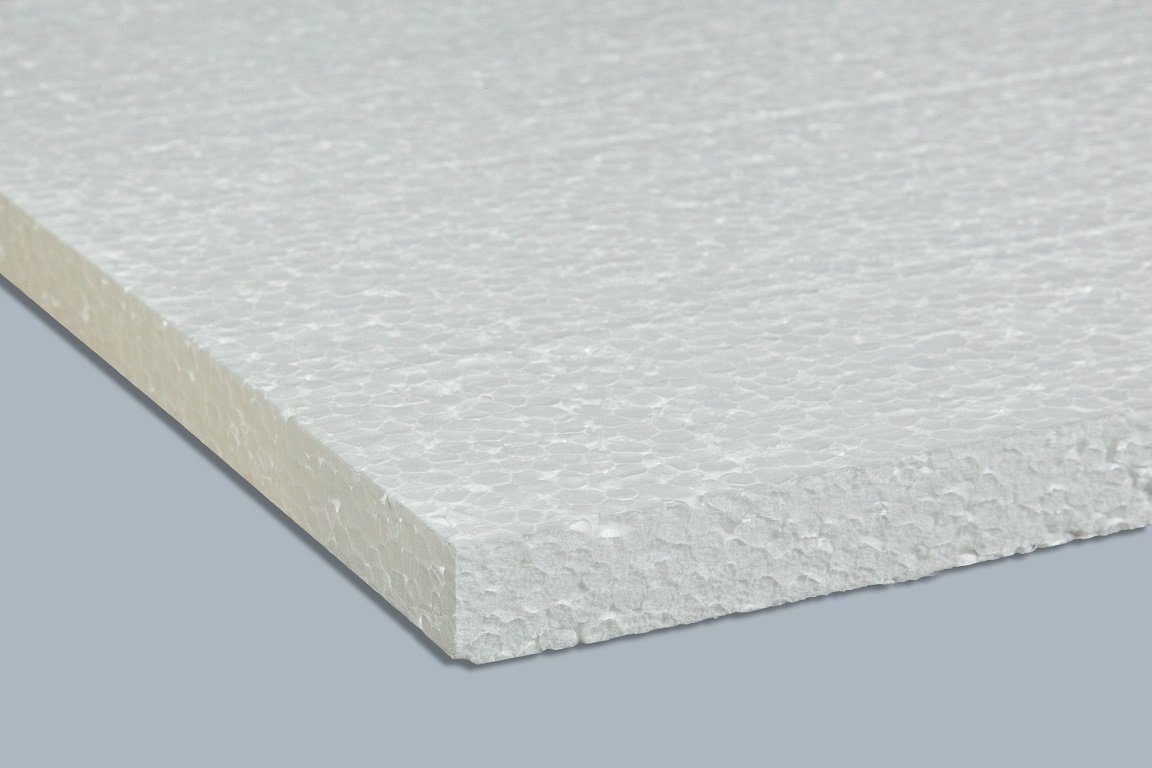
Due to the increasing consumer demand for thermal insulation materials, an active search for entirely new solutions began. For example, expanded polystyrene (EPS) gained popularity due to the following properties and characteristics:
- Excellent thermal insulation properties;
- Lightweight;
- Affordable prices.
This material is produced by expanding polystyrene to create a product with a large number of closed cells to trap air masses.
Starting from the 1980s, the requirements for thermal insulation gradually increased, so the properties offered by standard white EPS-90 (also known as polystyrene foam, Porozell, Styropor, air pop, and styrofoam) were no longer sufficient.
The first experimenter in this field is considered to be the company BASF, which used graphite particles in combination with polystyrene foam. The choice in favour of graphite was due to its two main advantages:
- The ability to reflect heat.
- The ability to absorb thermal radiation.
All this allowed for a significant reduction in the overall thermal conductivity coefficient of the material. Therefore, in the 1990s, a new product under the trademark Neopor appeared on the market. Thus, the enhanced thermal insulation properties of the new material allowed EPS Neopor to be successfully used in thinner layers, achieving optimal efficiency similar to that of standard EPS-90.
Comparison of the Two Materials by Specific Criteria
When choosing quality thermal insulation materials for the production of thermal panels, it is necessary to compare EPS-90 and EPS-90 Graphite Neopor to make the right choice.
When comparing materials, it is important to pay attention to the following list of parameters:
| Main Parameters | EPS-90 Regular | EPS-90 Graphite Neopor |
| Thermal Insulation Properties | Excellent thermal insulation characteristics, with a thermal conductivity coefficient ranging from 0.036 to 0.038 W/(m•K). | Has improved thermal insulation properties, with a thermal conductivity coefficient of 0.031 to 0.033 W/(m•K). Therefore, EPS Graphite is 20-25% more efficient than standard polystyrene. |
| Thickness and Space | Has increased thickness. | Provides the best thermal insulation performance at a thinner thickness. |
| Cost | Features an affordable price. | Considered more expensive due to improved properties and the use of additional technologies in production. |
| Efficiency and Durability | Has a limited lifespan. | Ensures excellent building energy efficiency in the long term, reducing heating and cooling costs. |
| Environmental Aspect | Environmentally safe type of polystyrene foam. | Environmentally safe material that gains an additional advantage due to reduced layer thickness and fewer resources used in production. |
Which Material to Choose – EPS-90 Regular or Improved EPS-90 Graphite Neopor?
When creating high-quality thermal insulation products, our company uses a professional approach in selecting the appropriate type of polystyrene foam. The choice in favour of improved EPS-90 Graphite Neopor should be made for two main reasons:
- If the budget allows for the planned purchase of foam.
- If the highest possible level of insulation efficiency with minimal thickness is a priority.
When the budget for purchasing thermal insulation materials is limited and thermal efficiency is not a top priority, EPS-90 can be preferred. Regular polystyrene foam remains relevant as it continues to provide excellent thermal insulation properties.
Therefore, for clinker panels where aesthetic appeal and high energy efficiency are important, we use EPS-90 Graphite Neopor.